


Sudan's Leadership Coalition Forms Alternative Government Amid Ongoing Conflict
As Sudan struggles through its third year of civil war marked by violence and humanitarian crises, a coalition spearheaded by the Rapid Support Forces (RSF) paramilitary group has announced the establishment of an alternative government, challenging the current military-led authorities situated in the capital, Khartoum. This new coalition is known as the Leadership Council of the Sudan Founding Alliance (TASIS).
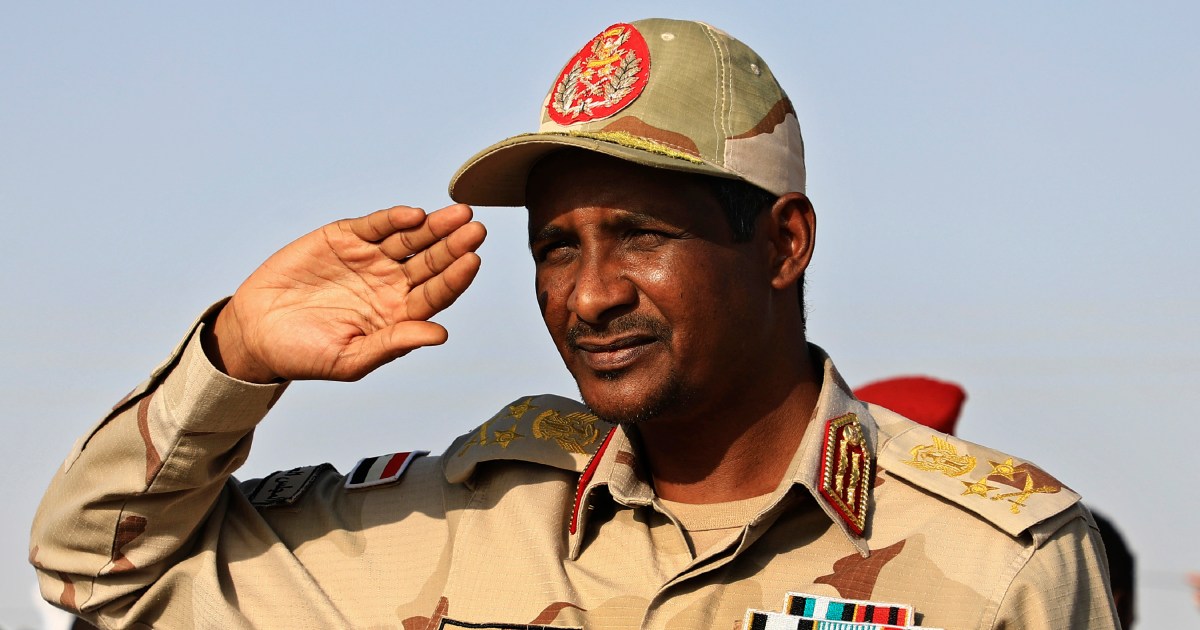
The RSF’s leader, Mohamed Hamdan “Hemedti” Dagalo, has been designated as the chair of a newly formed 15-member presidential council, which will also include regional governors. The political landscape of Sudan is shifting, as respected Sudanese politician Mohammed Hassan Osman al-Ta’ishi has been named prime minister of this emerging government.
In a statement celebrating this development, the leadership council expressed solidarity with the Sudanese populace, who have endured enduring hardships and conflicts for decades. The coalition reaffirmed its commitment to creating an inclusive, democratic, and decentralized Sudan, grounded in principles of freedom, justice, and equality. The aspiration for a peaceful transition reflects a desire for a diverse society that respects the rights of all citizens.
While the creation of an alternative government could further complicate the political landscape, leading to the emergence of competing governance structures amid a prolonged conflict between the RSF and the Sudanese Armed Forces (SAF), it signifies an important turning point for the nation. The ongoing hostilities have contributed to significant human suffering, with tens of thousands reported dead and nearly 13 million displaced according to United Nations estimates, rendering Sudan one of the most pressing humanitarian crises globally.
In recent months, violence in the western region of Darfur has intensified significantly, particularly around the city of el-Fasher, creating a dire situation that exacerbates food insecurity in the area. Human rights organizations have raised concerns regarding the actions of both the RSF and SAF, citing serious rights abuses. Allegations include the RSF’s engagement in sexual violence against women and girls as a means to assert dominance and forcefully displace communities.
Internationally, the United States has taken steps to address these issues, imposing sanctions on Hemedti earlier in the year for purported human rights violations, including civilian executions and obstructions to humanitarian aid delivery. Sudan’s current instability can be traced back to significant political shifts, including the ousting of long-time President Omar al-Bashir in 2019 after persistent protest movements, and the subsequent military coup in October 2021 that toppled the civilian government led by Prime Minister Abdalla Hamdok.
While the rivalry between army chief Abdel Fattah al-Burhan and Hemedti seems not to be rooted in ideology, both leaders have engaged in a power struggle for control over the state and its resources since their fragile partnership began to unravel earlier this year. Multiple attempts to negotiate a peaceful resolution have thus far failed, indicating that achieving stability in Sudan remains a complex and ongoing challenge.
#MiddleEastNews #PoliticsNews