
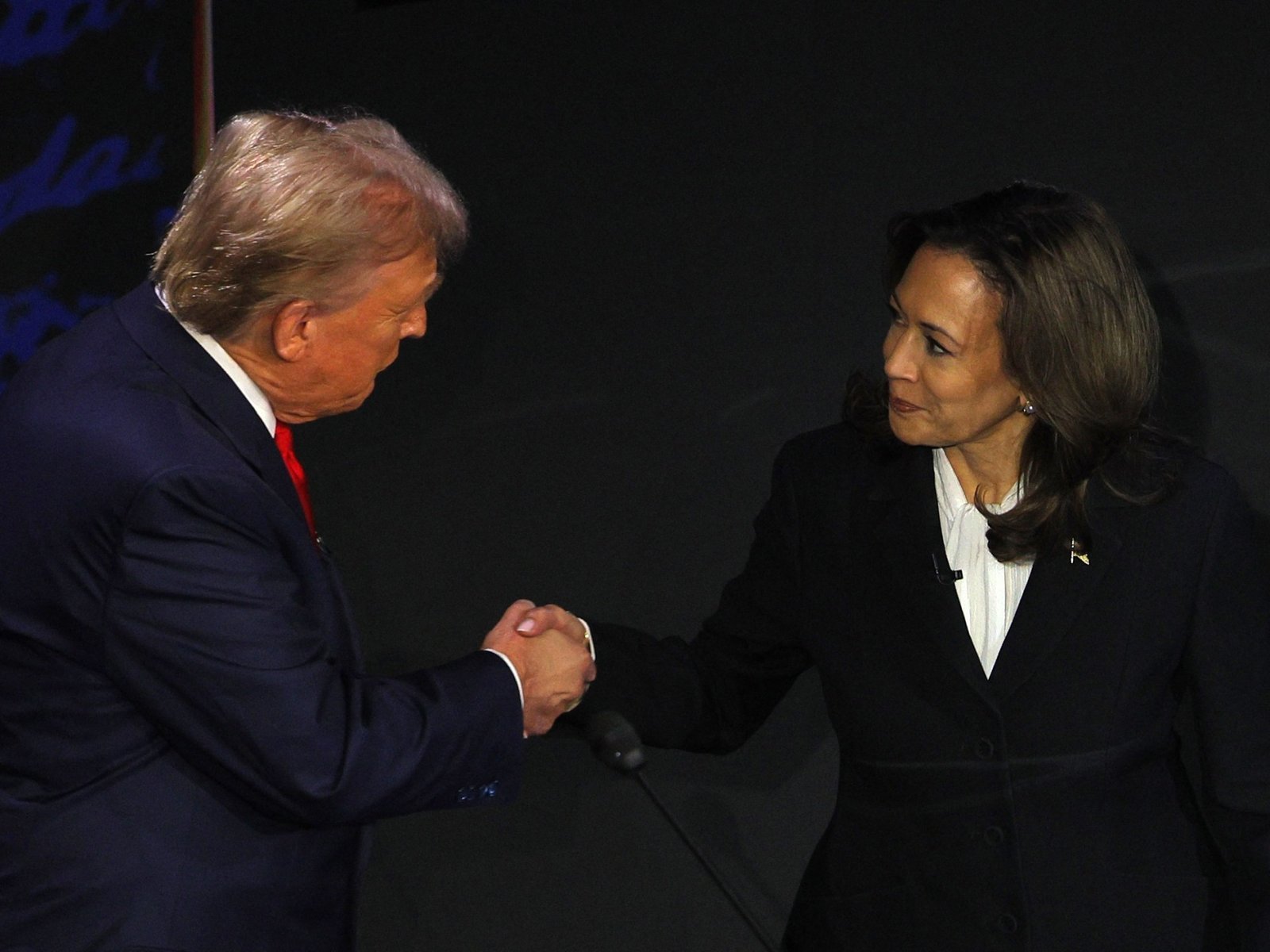


Democratic candidate Kamala Harris and former President Donald Trump find themselves in a tightly contested race for the presidency as the date for the election approaches. Recent data from a Wall Street Journal poll highlights that the two candidates are separated by a mere two percentage points in six of the seven critical battleground states poised to determine the outcome of the electoral contest.
The poll, conducted among 600 registered voters per state between September 28 and October 8, indicates a split in leads across pivotal states. Harris has a slight edge in Arizona, Georgia, and Michigan, while Trump leads in Pennsylvania, Wisconsin, North Carolina, and notably in Nevada by a margin of 5 percent, which stands out just beyond the poll’s margin of error.
It is important to note that winning a presidential election in the United States is not solely dependent on the national popular vote; candidates must strategically navigate individual state contests to accumulate electoral college votes. Each state contributes a specific number of points to a candidate’s total based on its population. In nearly all states, with the exceptions of Maine and Nebraska, the winner claims all electoral votes, creating a complex landscape where certain states, such as California and Vermont, consistently lean Democratic, while others like Oklahoma and Alabama are staunchly Republican.
The battleground states, particularly highlighted in this survey, are especially critical due to their competitive dynamics. The 2016 election serves as a recent reminder of how Trump secured victory despite losing the overall popular vote, relying on decisive wins in these swing regions.
According to an additional survey released by the Pew Research Center, Harris currently holds a narrow national lead, with 48 percent of respondents favoring her compared to 47 percent for Trump. Despite fluctuations in polling data over recent months, which saw Trump initially enjoying a more substantial lead against Joe Biden, the dynamics have shifted following the announcement of Harris as the Democratic nominee. In a September Morning Consult poll, Harris was found to have expanded her support, winning 51 percent to Trump’s 46 percent, although Trump’s popularity has rebounded amid discussions about economic conditions and geopolitical events.
As the election season progresses, it remains apparent that uncertainty looms over polling accuracy. Historical precedents caution observers that polls, such as those predicting a comfortable win for Hillary Clinton in 2016, can misestimate outcomes. Nonetheless, the general sentiment amongst various polls indicates an imminent close race heading into the November election.
In addition to the presidential race, control of the Senate and House of Representatives is also at stake on November 5. A recent poll from The New York Times has revealed challenges for the Democrats, who currently hold a narrow majority in the Senate. The survey suggests potential losses, particularly in Republican-leaning states and among incumbents.
This ongoing election cycle is not only crucial for the presidency but also for shaping the legislative landscape, with implications for judicial appointments and government policymaking. As the political climate remains fluid, the focus of the nation will remain firmly on the upcoming events that will shape the future of American governance.
#USElectionsNews #Politics