
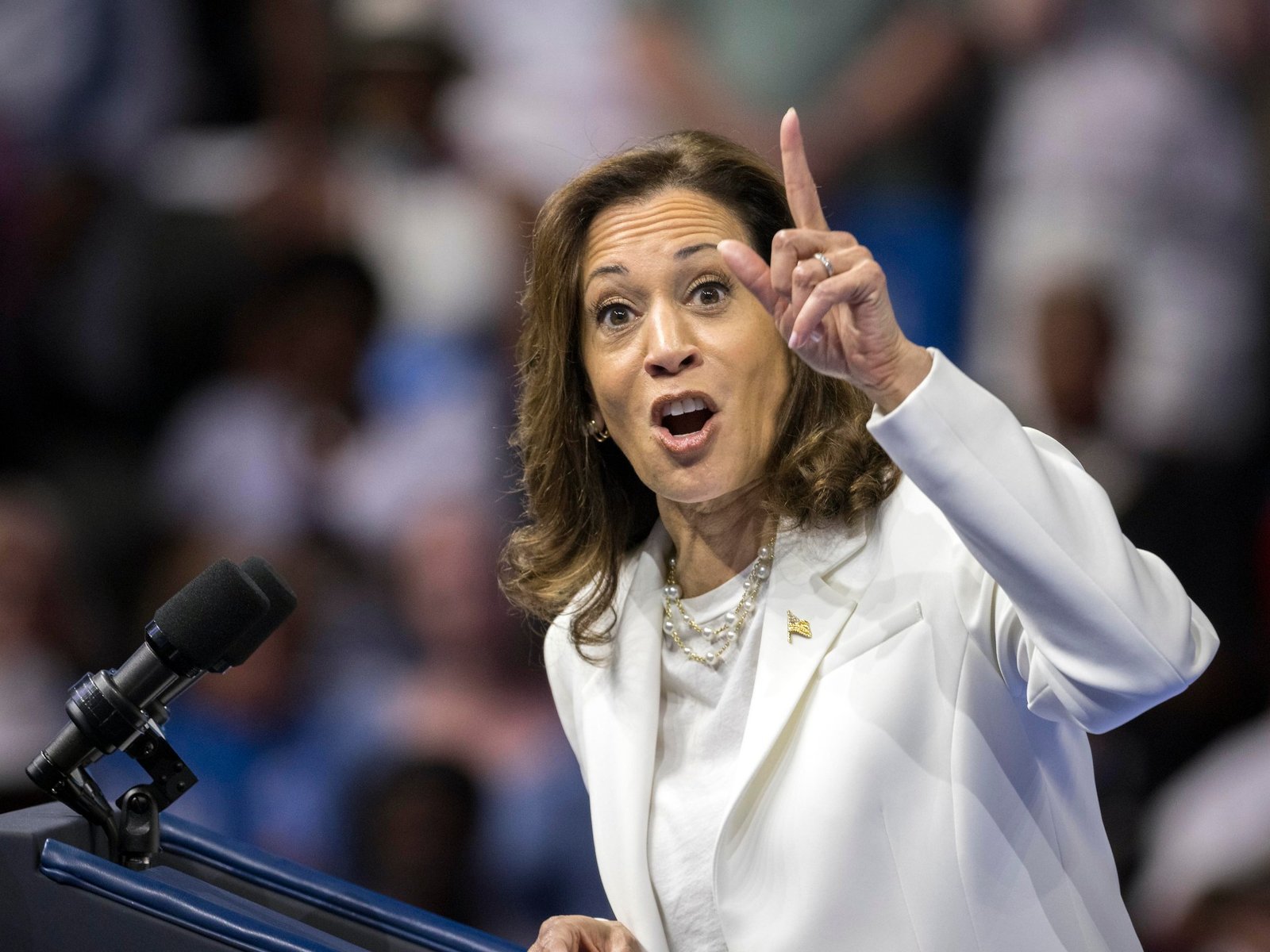


US Vice President Kamala Harris has articulated a commitment to preventing Iran from acquiring nuclear weapons, emphasizing this as a priority in her campaign for the Democratic presidential nomination. In a recent interview with CBS, Harris described Iran as the “most significant adversary” of the United States, aligning her concerns with escalating regional tensions following a ballistic missile attack on Israel by Iranian forces.
Harris highlighted that the missile assault, which reportedly consisted of 200 ballistic missiles, was in retaliation for key Iranian political figures’ deaths, including the Hamas leader Ismail Haniyeh and Hezbollah’s Hassan Nasrallah. This response reflects Iran’s strategic posture in an increasingly complex Middle Eastern landscape, which has been accentuated by the ongoing conflict in Gaza that has captured international attention.
The Vice President’s remarks indicate a renewed focus on the Middle East as a primary concern for U.S. foreign policy, particularly as the region’s dynamics evolve with the conflict and shifting alliances. While U.S. officials have previously identified competition with China and the repercussions of the Russian invasion of Ukraine as dominant foreign policy issues, the intensifying situation in the Middle East illustrates a return to traditional geopolitical challenges involving Iran and its relationship with Israel.
Harris abstained from detailing hypothetical military responses regarding Iran’s nuclear ambitions, an issue that has seen significant shifts since former President Donald Trump withdrew from the multilateral nuclear agreement in 2018. Harris’s commitment to ensuring that Iran does not develop nuclear capability aligns with broad U.S. policy objectives, although critics point to the impact of continued sanctions on humanitarian conditions in the region.
The Biden administration’s approach has also involved ongoing enforcement of sanctions initiated under the previous administration, with further measures targeting Iranian firms following acts of aggression. As tensions increased with the outbreak of war in Gaza, the U.S. government swiftly condemned Iran’s actions, underscoring a commitment to Israel’s security amidst rising regional hostilities.
Harris’s firm stance against Iran is reflective of a broader U.S. policy that seeks to maintain stability in the Middle East while addressing the complexities surrounding Iran’s geopolitical ambitions. The Vice President’s unwavering support for Israel, alongside her administration’s acknowledgment of human rights concerns in the region, illustrates the delicate balance U.S. leaders must navigate as they formulize responses to the nuances of Middle Eastern politics.
As the elections approach, Harris’s perspectives on foreign policy highlight an increasingly critical dialogue surrounding U.S. involvement in global peace initiatives and strategic relationships. The articulated priorities signal not only a commitment to national security but also a vision for cooperative solutions in a region marked by deep-seated tensions and the aspiration for peace.
#Politics #WorldNews