
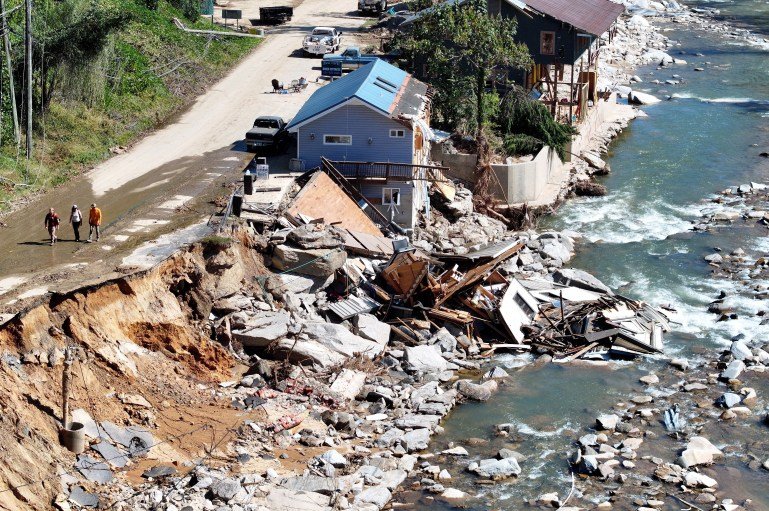


Hurricane Helene's Aftermath: A Community Struggles Amidst Natural Disaster and Political Fallout
In late September, Hurricane Helene ravaged the western region of North Carolina, drastically affecting the lives of hundreds of residents. Among those impacted was Chris Heath, an executive chef from Asheville, whose home fortunately remained intact. After enduring three days without electricity or water, Heath and his wife decided to evacuate with their three children, seeking refuge with friends in Florida, a nine-hour drive south.
Heath recounted an arduous journey, stating, “There were loads of trees down in the road. We had to cut our way out.” Unfortunately, less than a week later, Hurricane Milton loomed ominously, prompting the family to once again take to the road, this time fleeing from its anticipated path toward Orlando, Florida.
Back in Asheville, conditions remain dire as the community grapples with the fallout from Hurricane Helene, which unleashed unprecedented flooding. Thousands in the area are still without power or clean water, marking a humanitarian crisis that officials predict could take weeks to resolve. Schools are indefinitely closed, and residents are resorting to hauling water from creeks for essential needs.
The storm has resulted in tragic loss, with at least 91 lives reported across the affected regions, including North Carolina and other Southeastern states. Entire communities have experienced devastating losses, compelling local leaders to assess the unprecedented impact of this natural disaster. “It’s pushed the imagination as to what’s possible from such a storm,” remarked Parker Sloan, a commissioner from Buncombe County.
As recovery efforts unfold, the political landscape complicates the response to the disaster. With the U.S. presidential election just weeks away, the discourse has shifted somewhat towards political blame. Notably, former President Donald Trump has criticized Democratic leadership, asserting that they have failed to adequately support hurricane victims in crucial regions like North Carolina.
Trump’s comments, which include unfounded accusations of blocked relief for predominantly Republican areas, have prompted a wave of conspiracy theories online, further muddling public understanding during an already chaotic time. Despite these narratives, federal relief efforts—bolstered by FEMA and active-duty personnel—have already distributed millions in assistance, with North Carolina Governor Roy Cooper expressing deep gratitude for federal support.
However, local frustrations persist, particularly regarding aging infrastructure that exacerbated the storm’s effects. Residents such as Heath are left contemplating their uncertain futures as they navigate a devastated job market. “It’s frustrating,” he shared, emphasizing the financial strain placed upon his family and the challenges of rebuilding amidst feelings of neglect.
The aftermath of Hurricane Helene poses not only an immediate humanitarian challenge but also raises significant questions regarding the electoral landscape in North Carolina. Observers express concern that the lingering effects of the disaster may hinder voter turnout, particularly in rural, Republican-leaning areas. Emergency measures have been proposed to facilitate voting, yet experts recommend vigilance in ensuring that all citizens have a fair opportunity to participate in the democratic process.
The struggle for recovery in the wake of Hurricane Helene serves as a poignant reminder of the strength and resilience found within communities during times of adversity. As the world watches, the spirit of solidarity and determination rings true.
#WorldNews #Politics