
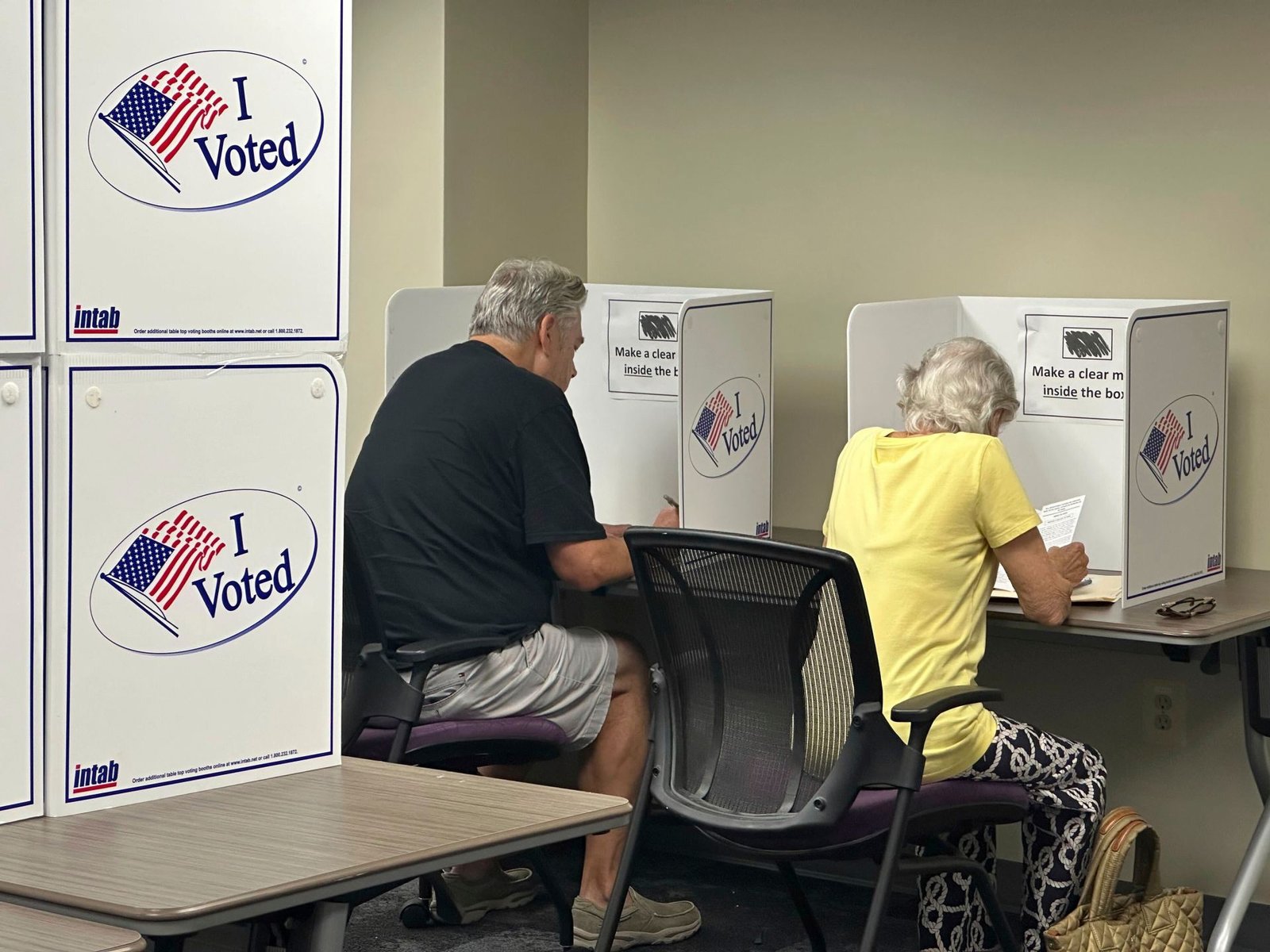


The United States Justice Department has initiated a lawsuit against Virginia over the state’s recent actions in voter registration, which the department argues may infringe upon citizens’ voting rights ahead of the upcoming presidential election on November 5. This legal challenge arises in the context of an executive order from Virginia’s Republican Governor, Glenn Youngkin, aimed at enhancing voter verification processes.
In August, Governor Youngkin’s order set in motion the removal of individuals from voter registration rolls who could not be confirmed as citizens by the state’s Department of Motor Vehicles. Critics argue that this measure is not only premature but may violate the 90-day “quiet period” mandated by The National Voter Registration Act, which seeks to safeguard the rights of voters by prohibiting systematic removals close to a federal election.
Assistant Attorney General Kristin Clarke emphasized the importance of this quiet period, stating, “Congress adopted the National Voter Registration Act’s quiet period restriction to prevent error-prone, eleventh-hour efforts that all too often disenfranchise qualified voters.” Clarke reaffirmed that ensuring the protection of the right to vote remains a top priority for the Justice Department.
In defense of his executive order, Governor Youngkin contended that his actions align with legal requirements, framing the lawsuit as a politically motivated attack on Virginia’s election integrity. “Virginians – and Americans – will see this for exactly what it is: a desperate attempt to attack the legitimacy of the elections in the Commonwealth,” Youngkin stated, reinforcing his commitment to safeguarding what he describes as “common-sense steps” to ensure a secure electoral process.
Despite various claims propagated by certain Republican factions regarding rampant noncitizen voting—a narrative that references misleading assertions from the previous presidential election—voter administration practices in the U.S. continue to be predominantly state-controlled, with federal guidance being minimal. In fact, a recent analysis by the Brennan Center for Justice, a non-partisan policy organization, has found that incidents of noncitizen voting are exceedingly rare. Their comprehensive study of 23.5 million votes cast in the 2016 general election identified only 30 votes flagged for suspected noncitizen participation.
As the 2024 elections loom, numerous states—including Texas, Tennessee, Ohio, and Alabama—have adopted stricter requirements for voter registration that may inadvertently disenfranchise eligible U.S. citizens. These developments highlight the ongoing debate surrounding voter rights and the balance between election integrity and accessibility.
The legal proceedings in Virginia will likely serve as a pivotal case reflecting broader national trends in election administration, underscoring the critical relationship between governance, voter rights, and public confidence in the electoral process.
#Politics #USElectionsNews